After writing my full-length article titled Breaking Into Legacy: A How-To, it dawned on me that it would be nice for my readers to see all the Legacy content that I have posted since this blog started. There have been Top 5 posts, deck construction posts, and much more, and as always there is more to come.
Today, I just wanted to give you links and brief descriptions of each of the most relevant Legacy-related posts I have put up since the inception of this blog.
To Ban or Not To Ban? Brainstorm
This post relates to the recent SCG Top-8 in Columbus where 6 of the top 8 decks featured Delver, and 7 out of the 8 decks featured 4 copies of Brainstorm. The internet was in a kind of uproar that week, and thoughts about banning Brainstorm in Legacy ran rampant. This article goes over my opinions on whether or not it should happen, and why.
Top 5 Cards in Legacy
Not sure which cards to be playing in Legacy right now? This post goes over what I believe to be the 5 most powerful spells in the format right now, and rationale behind each of them. Brainstorm was not included in this list however, for obvious reasons.
Shardless Order vs other BUG Variants
Gerry Thompson, the innovator of the Shardless BUG archetype, goes into detail in his article for StarCityGames about a new BUG-colored deck he wants to try in Legacy. This post goes over my thoughts on the deck, and whether or not it would be a good call in the meta right now.
So there you have it, as time goes on I will add more posts to the Legacy archive, but hopefully this list will keep your cravings for content at bay for now!
[Class Purpose: Sneeze post]
Showing posts with label Basics. Show all posts
Showing posts with label Basics. Show all posts
Friday, June 27, 2014

Thursday, June 26, 2014
[Channel Review] Gathering Magic on YouTube

Cool Stuff Inc. is a LGS (local game store) located in Florida that has a wide variety of board games, cards games, and other great products. They have also started a YouTube Channel called "Gathering Magic", which hosts videos every week.
My personal favorite segment is titled "Judge's Corner", where David Greene (a level 2 judge) talks about the ins and outs of the various rules the game presents. While this may seem like a silly thing if you are unfamiliar with the game, it is actually a phenomenal resource as the intricacies and specifics to the rules leave even veteran players stumped on occasion.
In addition to Judge's Corner, the channel hosts many budget deck construction videos, how-to videos, and draft videos. They even have full playlists dedicated to specific decks across all the formats, which allow newer players to understand the different lines of play each deck has to offer.
It is also very cool to note that they often have guests on the show, typically pro players that they sit down with to discuss the game or a deck they might be working on. It is always interesting to hear professional players talk about their mindset when playing the game because it helps other players develop their own skills.
Here is an example video about The Stack, one of the most elementary concepts used while playing Magic:
If you want more content like this, I highly suggest you visit Gathering Magic's channel on YouTube.
Click here to visit their channel!
What do you think about their channel? Do you like the content provided? Let me know in the comments!
Wednesday, June 18, 2014
Magic Fundamentals - Part 1: Mana Sources
Like all sports, hobbies, and pieces of art, Magic has a diverse fanbase with many differing opinions. "Which card is better?", "Which deck is better?", and "What's the best combination of cards to play?" are often asked amongst new and old players alike.
However, all Magic players know (or should know) the basics of the game before attempting to "make it big" and win the next big event. Today I will be discussing the first of many Magic fundamentals


There are many ways to cast spells in the game of Magic, and mana is used in (almost) all of them. Depending on the deck you are playing you may run 0 land (Manaless Dredge), less land if you're a tempo deck (BUG Delver), or if you're a control deck, more land than most.
Regardless of which kind of deck you are playing, it is important to make sure you can cast the spells in your deck! It would be quite silly to run a deck full of cards like Blightsteel Colossus if you don't run enough land to cast it reliably.
In deck construction, you want to ensure that you can cast your 1-mana spells on turn 1 and your 4-mana spells on or before turn 4. For example, when running an aggressive strategy like Mono-Red, running 21 lands is more than enough because your highest costing spell is generally only 3 or 4 mana. (Mono Red Aggro - SCG Columbus)
Contrarily, if you're playing a control-oriented strategy that relies on killing your opponent in the late game with spells like Elspeth, Sun's Champion, you can run more land because your curve of spells is much higher. (U/W/R Control - SCG Columbus)
Mana abilities are abilities from permanents that add mana to your mana pool. There are a few key points to mention about them:
However, all Magic players know (or should know) the basics of the game before attempting to "make it big" and win the next big event. Today I will be discussing the first of many Magic fundamentals
Part 1: Mana Sources
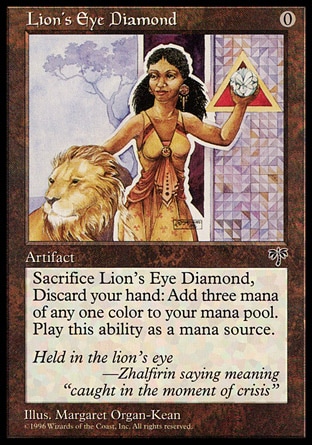
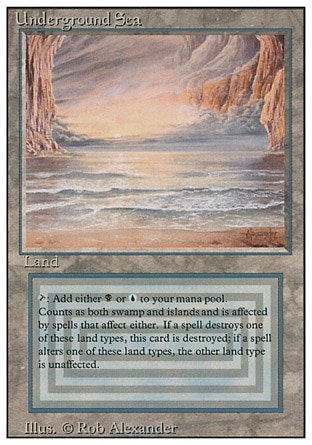
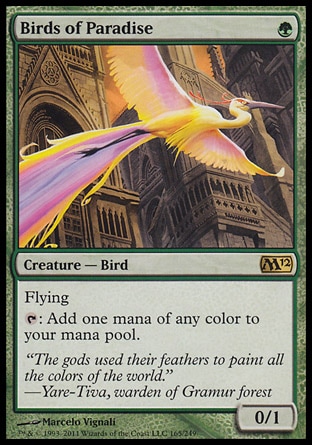
There are many ways to cast spells in the game of Magic, and mana is used in (almost) all of them. Depending on the deck you are playing you may run 0 land (Manaless Dredge), less land if you're a tempo deck (BUG Delver), or if you're a control deck, more land than most.
Regardless of which kind of deck you are playing, it is important to make sure you can cast the spells in your deck! It would be quite silly to run a deck full of cards like Blightsteel Colossus if you don't run enough land to cast it reliably.
In deck construction, you want to ensure that you can cast your 1-mana spells on turn 1 and your 4-mana spells on or before turn 4. For example, when running an aggressive strategy like Mono-Red, running 21 lands is more than enough because your highest costing spell is generally only 3 or 4 mana. (Mono Red Aggro - SCG Columbus)
Contrarily, if you're playing a control-oriented strategy that relies on killing your opponent in the late game with spells like Elspeth, Sun's Champion, you can run more land because your curve of spells is much higher. (U/W/R Control - SCG Columbus)
Mana abilities are abilities from permanents that add mana to your mana pool. There are a few key points to mention about them:
- Mana abilities are written as "T: Add ~ to your mana pool." If an ability is written with the "tap" symbol and a color immediately after and it's ability adds mana to your mana pool, it is considered a mana ability. This means that the first ability on Deathrite Shaman is NOT a mana ability because it involves a target to resolve and add mana to your pool.
- Mana abilities do not use the stack. You can add mana to your mana pool using mana sources at any time, and they cannot be responded to. Because Deathrite Shaman's ability has a target (and therefore goes on the stack), it is not a mana ability (just to clarify).
Another great resource to understand mana abilities is a video from Gathering Magic's series Judge's Corner. Here is a link to the video about Mana Abilities.
That wraps up Part 1 of our Magic Fundamentals series. We will be posting more of these "basics" articles frequently!
Subscribe to:
Posts (Atom)